
289.2K
Downloads
225
Episodes
A podcast dedicated to the discussion of healthcare simulation. Debunking dogma, demystifying jargon and translating knowledge. Hosted by Victoria Brazil, Jesse Spurr & Ben Symon
Episodes
Oct 8, 2016
Oct 8, 2016
2 min
Day 1 – Pause and Discuss with Jessica Stokes-Parish
Jessica Stokes-Parish (@j_stokesparish) was a co-convenor for the 2016 Australasian Simulation Congress. In this short interview on Day 1 we talked about the highlights of the conference so far, and her work on women speakers at conferences and women in STEM more generally. See also @WISSummit on this topic.
Sep 16, 2016
Sep 16, 2016
23 min
Case
You’ve got your sim program up and running. The sessions are regular and you’ve managed to find a time when the doctors and nurses can both come. You’ve mastered the technical stuff well enough and you’ve run some cracker scenarios. Your debriefing is … well….. getting better….
During your performance review with your department head, she says that you really ought to be publishing some of this stuff – “it's great”, she says. “I’d like to see 1 or 2 papers from you in the next 12 months. And it would get admin off our backs if you could prove that the sim session are worth the money with some evidence”
You wander off excited at the possibilities. You really want to demonstrate the effect of your sims, and start planning an RCT where one group of registrars does a sim and the other group just does a paper case. You’re not sure what should be the outcome measure……..
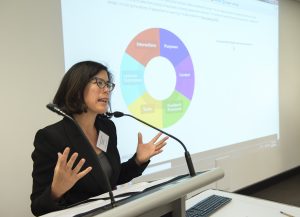 Margaret Bearman (@margaret_bea) was our special guest for this month’s episode. She is the course convenor of the Grad Cert in Clinical Simulation at Monash University in Melbourne, and Deputy Director of the NHET sim program (listen also to our Pause and Discuss on this program)
Margaret’s first piece of advice was to read widely; to think about how our scholarly work can contribute to ‘the research conversation’. This means we can see what others have done, how they did it, and where the gaps and new questions are. Margaret credited the concept of this conversation to Lorelei Lingard, who has also a written wonderful series on academic writing well worth reading for budding manuscript authors.
The journals recommended were:
- Simulation in Healthcare
- BMJ STEL – Simulation and Technology Enhanced Learning
- Advances in Simulation (See Editor in Chief Debra Nestel’s expert opinion piece in this months’ Simulcast journal club)
- Clinical Simulation in Nursing
Plus general health professional education journals like The Clinical Teacher
Various experts / research summits have also resulted in publications on current opportunities and priorities in healthcare research ( and here)
Acquiring and refining research skills was the next recommendation. Our ‘positivist’ world view (think hypothesis testing, RCTs etc) that many clinicians share may not prepare us well for all the methods that are needed for the current research questions in healthcare simulation. Those interested might consider looking at approaches like realist evaluation.
A range of strategies was suggested including courses (including broader health professional educational research skills), mentors and collaboration, using library resources, and conference workshops/ sessions (like this one by William McGaghie planned for Sim Health in September this year).
Margaret also shared some of her current work as an example of the elements of putting a research project together. Thanks again to Margaret Bearman for such an insightful and informed perspective.
Aug 17, 2016
Aug 17, 2016
26 min
Debriefing is a social event – wisdom from Walter Eppich
Case
Ellen felt anxious walking into the debrief room.
The ED team had just finished an in situ simulation where the focus was on rapid sequence intubation (RSI) in head injury, and using the new intubation checklist. This was the third sim session in a series the department had agreed to run following 3 patient cases where significant desaturation occurred during intubation attempts.
Ellen thought they’d done OK but had recognized a lot of the usual ‘bad habits’ that frankly irked her when she worked on the floor with these guys – no nasal prong O2, a pretty vague conversation about who was going to actually do the tube, and low level grumbles about the time it takes to do the checklist. She was particularly disappointed that those things had come up in the last sim, and that a couple of the nurses had participated in that previous sim. “How can we actually get this into their heads?” she thought.
Entering the debrief room, Ellen knew what she wanted to bring up, but felt her stress level rising. Reactions first, she thought, and then facts. What would be a good advocacy inquiry question? What else did they say in that debriefing course…..? …….Should she let the learners dictate the topics?
And she knew that the ED consultant who was in the scenario was not a big fan of sim, and anticipated he might be difficult. His performance is probably off limits for today, she thought.
Deep breath.
“OK guys that was great. Well done”……..
In this episode of Simulcast we were delighted to talk with Walter Eppich (@LearnThruTalk). Walter is a paediatric emergency physician from Chicago, and Associate Professor of Pediatrics and Medical Education, Northwestern University Feinberg School of Medicine. He is Principal Faculty, Harvard Center for Medical Simulation (@MedSimulation), and a PhD Candidate, School of Health Professions Education, Maastricht University, Netherlands. He has published prolifically in the area of simulation debriefing.
Walter shared some general thoughts on debriefing, including ‘’letting go’’ of the idea that we must have a strong hand on the debrief, the importance of translating lessons to real practice, and the idea that participants also need to take responsibility for the process and success of the debrief. This last concept is embodied in his article with Adam Cheng (@DocChenger) on Learner Centered Debriefing, this month’s Simulcast Journal Club article.
He made the point that many of our options/ models for debriefing are more similar than they are different, as illustrated in his own blended approach, described in his PEARLs paper.
Walter then gave us a practical step by step guide to how he would approach Ellen’s debriefing case, and included additional thoughts on previewing topics, ensuring psychologic safety (see also landmark work by Amy Edmonson here), and using a strategy like the Center for Medical Simulation ‘Basic Assumption’ to maintain that positive regard for learners. He emphasized that debriefing is a social event, and one of a number of examples of learning conversations that are his passion. This is especially relevant as more simulation educators engage in debriefing after in situ scenarios, where there is an existing relationship between participants and debriefers.
Walter is also part of an exciting new simulation debriefing project with Adam Cheng and others – follow @Debrief2Learn for updates on the launch of website of same name
We’ll be hearing more from Walter on those learning conversations soon, but in the meantime enjoy his practical wisdom on the podcast.
More on debriefing from the #FOAMed blogosphere
https://www.aliem.com/2014/simlife-em-challenge/
http://stemlynsblog.org/good-to-talk-debrief-in-the-emergency-department/
http://intensivecarenetwork.com/radford-vandyke-simulation/
https://emsimcases.com/2015/06/30/debriefing-techniques-the-art-of-guided-reflection/
https://www.aliem.com/2014/improving-debriefing-skills-pathways-grid/
Jul 25, 2016
Jul 25, 2016
6 min
2 - Pause & Discuss:
The Australasian Simulation Congress with Julian Van Dijk
Collaboration is vital for successful sim programs, and yet we often work in isolation from fellow simulation enthusiasts. The Australasian Simulation Congress is a great opportunity for those of us in this part of the world to learn, to network, and to be inspired in our simulation work. It’s a joint effort for SimHealth (folks like us in healthcare), and Sim Tect (amazing simulation people from aviation, engineering, human factors, manufacturing and more)
Big name guest speakers include Adam Cheng (@docChenger), a debriefing guru from Alberta, Canada. Look out for his new online project debreif2learn.com going live soon. Also speaking are Carrie Hamilton from the UK and William McGaghie from Chicago, USA.
It’s on in Melbourne from Monday 26th September to Thursday 29th September, and we spoke to Julian Van Dijk (@julianvandijk2), the Sim Health conference convenor, about what to expect.
Jul 16, 2016
Jul 16, 2016
30 min
You have been asked to develop a five-year strategic plan for simulation services in your hospital. Through your literature review you recall an article by David Gaba, ‘The future vision of simulation in healthcare’. All your dreams have been answered. In 2004 Gaba mapped the dimensions of organisational applications of simulation. You are thrilled to find his projection of two possible histories viewed from 2025; one optimistic – simulation integrated into the very fabric of health care; and one pessimistic – lamenting the abject failure of simulation to progress past and ad-hoc expensive education luxury. Now your challenge lies in which history rings most true in 2016 and how do we move forward for the next five years?
In 2016, the term ‘simulation’ covers a wide range of activities - procedural skills, team training, quality improvement, mannequins, simulated patients, virtual reality and much more. And yet healthcare simulation remains inaccessible, badly delivered or simply failing to live up to promise in many contexts.
To kick off our first episode of Simulcast, Jesse and I decided to tack a step back and look at the ‘state of the art’ of healthcare simulation in 2016. We used David Gaba’s landmark paper - The future vison of simulation in health care from 2004 - as a starting point.
David Gaba is one of the grandfathers of healthcare simulation. Trained as a biomedical engineer, a pilot and then as an anaesthesiologist, he brought a unique vision to how to train better for the work we do in healthcare.
When he wrote this paper in 2004, healthcare simulation was in its infancy, and mostly delivered around expensive mannequins in dedicated simulation centres. I had just done my first Crisis Resource Management (CRM) course as a participant at Monash simulation that same year, and was an immediate convert to the possibilities.
In the podcast we look at the clarity Gaba offered us in that paper - how to think about the dimensions for healthcare simulation delivery – the technology used, the participants, the learning objectives, the environment of delivery.
But he also offered us two future visions of simulation for 2025. One is optimistic – in which healthcare sim is embedded and integrated with care, training and quality improvement. The alternate vision is one in which simulation never really ‘made it’.
We bring our own biases and hopes to the discussion…..